7 DTC Beauty Brands to Study for Prospecting in 2026
November 5, 2026
A prospecting list pulled from store directories makes every beauty label look equally ready for a pitch. The homepage is polished, the palette is current, and checkout works. None of that tells you whether the brand is spending, testing, or sitting still.
A better starting point is the ad trail. Read DTC beauty brands through what is live in Meta and Google right now: new launches, routine bundles, shade-led complexion ads, and creative that also nods to a retailer. Those patterns time the outreach. A fresh launch is a different conversation from a quiet account, or from a burst of ads that die inside two weeks.
The seven labels below are worth studying because the behavior is visible, not because a reputation score says so. Glossier, Rhode, MERIT, Saie, ILIA, Topicals, and cocokind each sell on their own site, and most also sell somewhere else. Match the note to the pattern in front of you.
Table of Contents
- 1. Glossier
- 2. Rhode
- 3. MERIT
- 4. Saie
- 5. ILIA
- 6. Topicals
- 7. cocokind
- How the seven DTC beauty brands differ in focus, sales channels, and creative angles
- Turning Beauty Ad Signals Into Your Next Prospect List
1. Glossier
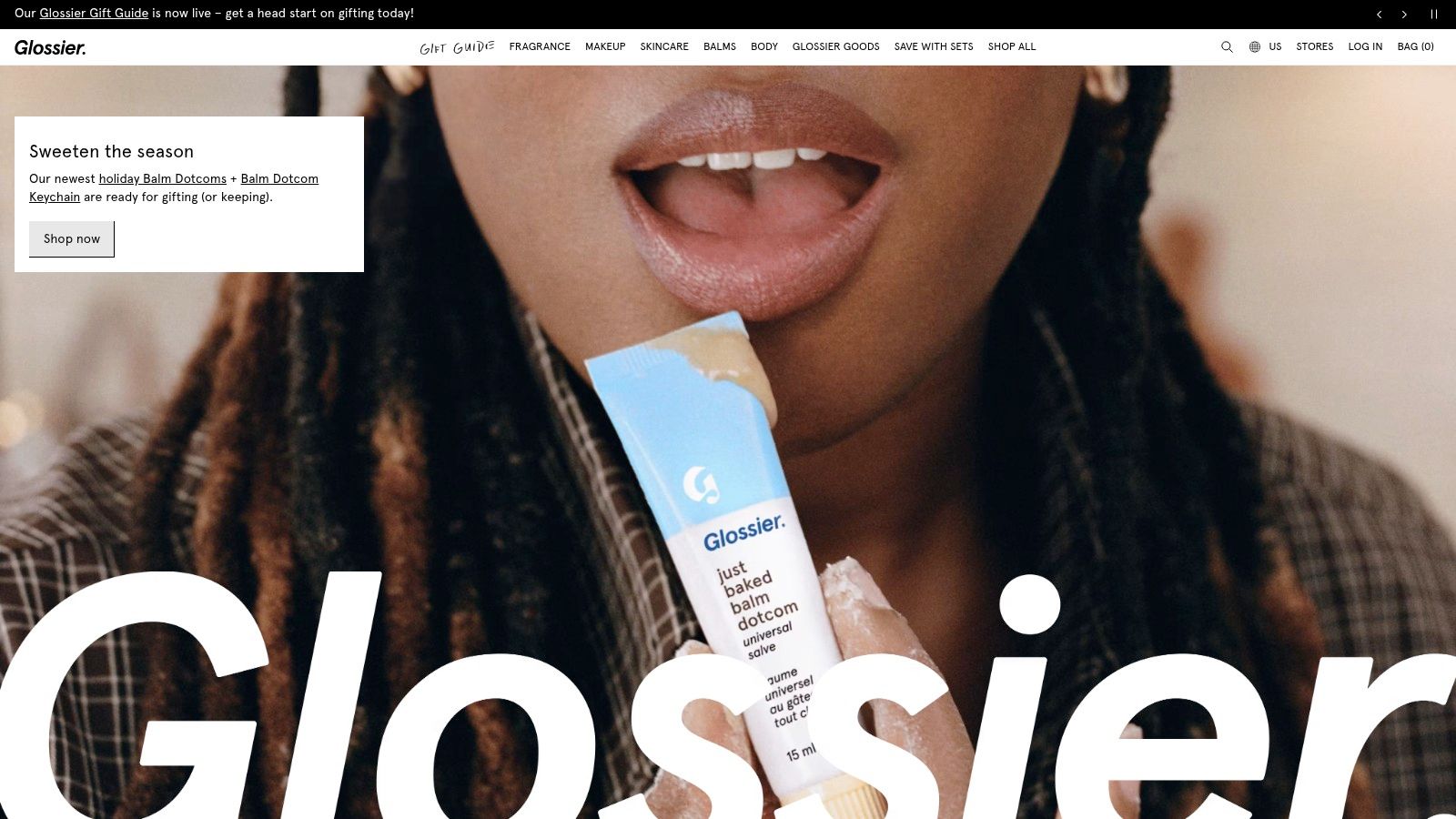
Glossier still sells a skin-first routine across skincare, makeup, body, and fragrance on Glossier, with retail and wholesale beside the site. The ad account usually looks like one aesthetic stretched across categories. Balm textures, soft crops, and routine language show up together. That consistency is an asset. A cold email that recites the origin story is late.
Watch the mix, not the fame. When body or fragrance starts taking a larger share of live ads, the team is pushing a category that has not always been kind to online sellers. NielsenIQ reported that U.S. direct-to-consumer beauty and personal-care sales reached $3.5 billion in the 12 months ending September 2022, up 7.8%, while brand.com sales rose only 1.3% and DTC fragrance sales fell 20.9%. A fragrance push against that history is a timed opening for creative or lifecycle help.
When the look stops being the pitch
Practical rule: If the live set is mostly evergreen heroes, pitch a test in a quieter category. If new sets are launching, pitch production capacity, not brand strategy.
Retail naming in the ads means the site is sharing demand. Protect owned-channel margin. Don't pretend this is a pure-play account. For a wider filter before you open a library, use this ecommerce market research walkthrough. Awareness makes cold outreach harder, and this scale often already has specialists on retainer.
2. Rhode
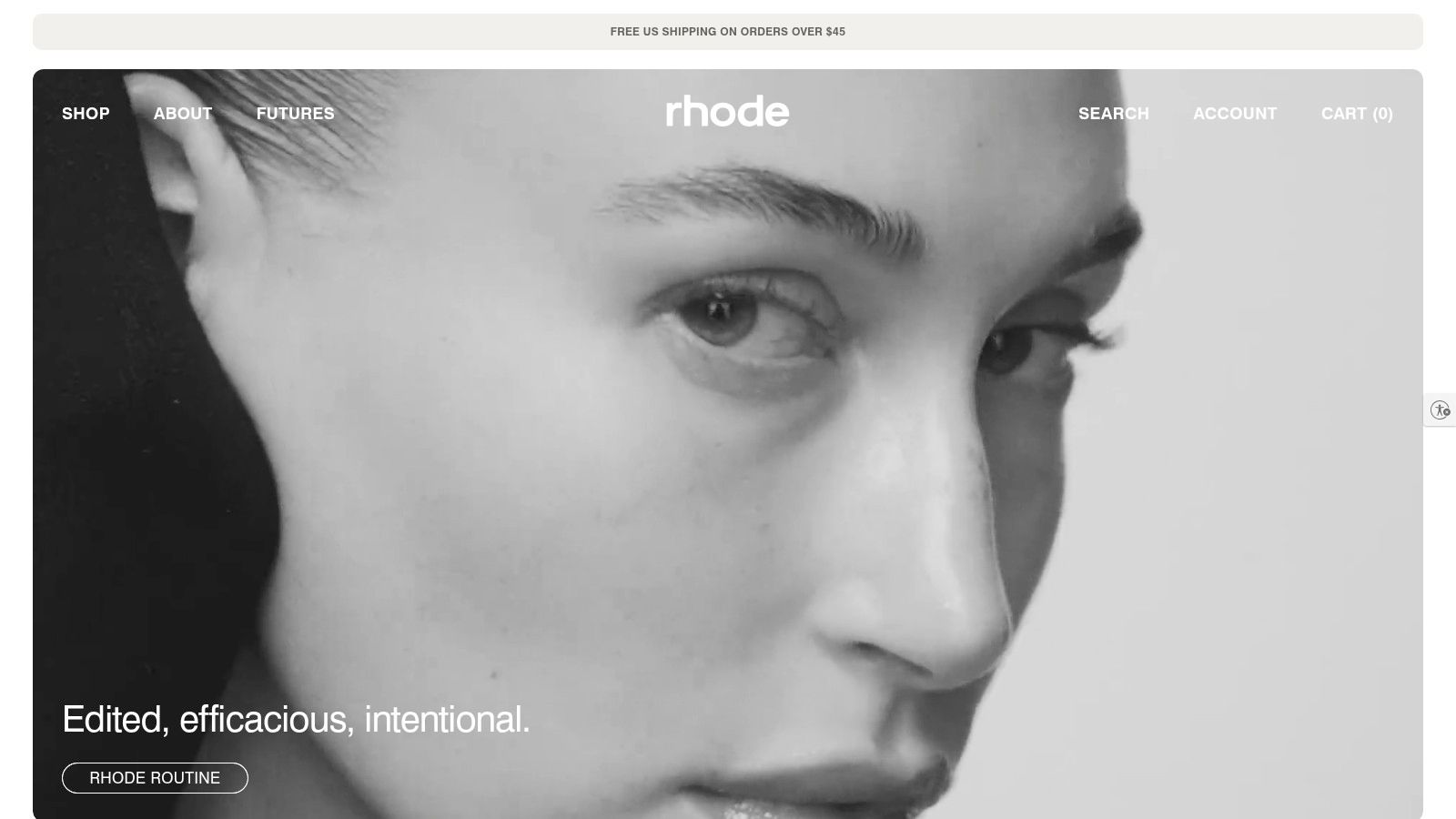
Rhode's store at Rhode Skin is built for drops. Skincare, lip, and cheek sit in a short catalog, with bundles, new shades, and limited runs doing the storytelling. In the ads, that shows up as a clock: one hero, a set, then a shade or collab that disappears.
A run of short-lived launch ads means the team is either scaling creative or failing to find a winner. Social commerce is the other half of that read. Alongside NIQ's Business Wire update on global beauty, the channel picture is that 68% of social-commerce purchases are impulse-driven, and TikTok Shop consumers place 3.5 more orders than the average e-commerce beauty buyer. Scarcity creative feeds impulse. It does not, by itself, build the repeat path.
Pitch the set, not the celebrity
- Launch week: Offer UGC variants while the team is still swapping hooks, before the public drop.
- Bundle ads that stay live: Pitch replenishment only after the same SKU survives the drop.
- A paused collab: Treat the end of a limited shade as a planned stop, not a distressed account.
High visibility means your note competes with a pile of creator pitches. Tie it to the current drop. Skincare advertisers with live Meta spend are easier to time in Shopify skincare stores running Facebook ads than in celebrity press.
3. MERIT
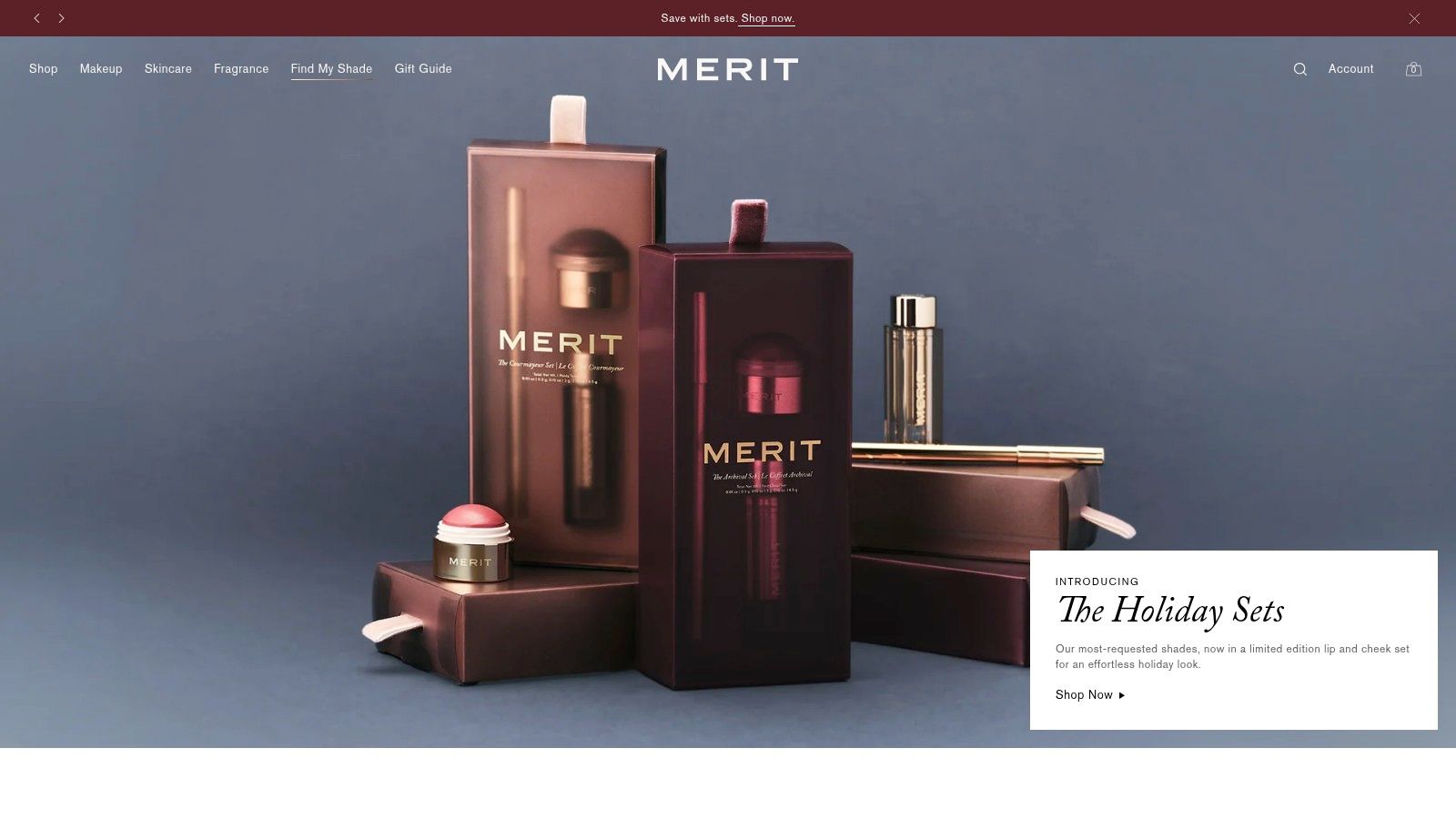
MERIT keeps the assortment small on purpose. Makeup and skincare essentials, a quick routine, and a premium finish sell at MERIT Beauty and at Sephora. Ads tend to be tutorial-clean: one look, few products, holiday sets when the calendar demands it.
Online is already a primary shelf, not a side door. NielsenIQ's 2024 mid-year update reported that ecommerce accounted for 41% of all U.S. beauty and personal-care sales in the first half of 2024. The same write-up noted Forrester's 2023 finding that only 17% of U.S. online adults had bought cosmetics or makeup directly from a brand or manufacturer. MERIT's dual shelf is that split in practice. Site ads and retailer ads can run the same week.
A minimalist account with a sudden set launch is a creative-capacity lead. The same account, if it only retargets heroes, is a retention lead.
Pitching "own the customer" as if Sephora were a mistake ignores the setup. Keep tests at a premium AOV. Bold, maximal makeup creative will fight the brand. Match the routine, or don't send the deck.
4. Saie
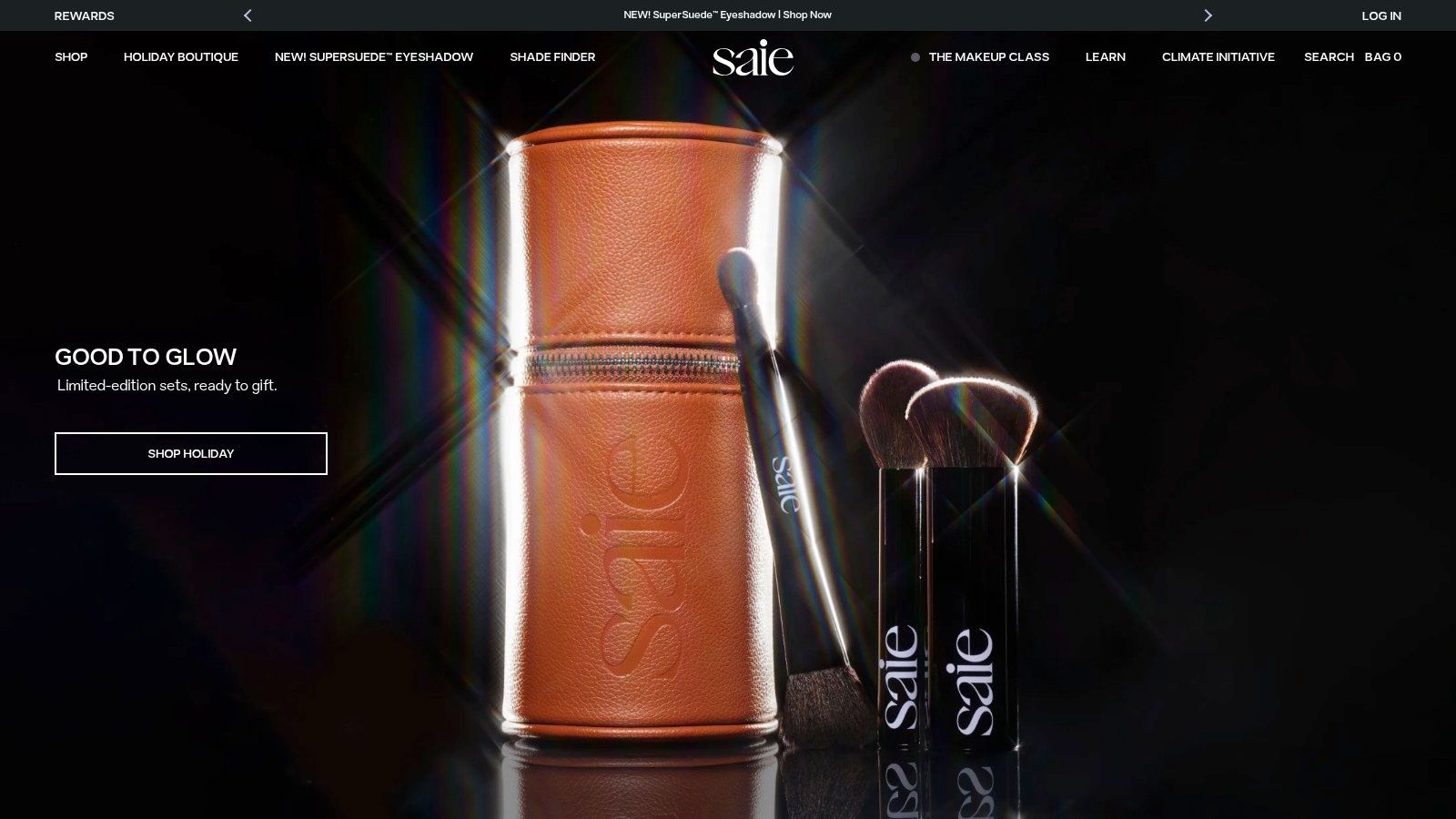
Saie sells skin-forward makeup across complexion, cheek, lip, and eye, including tinted moisturizer with SPF, plus shade help and education, at Saie. Sustainability language and a cruelty-free certification sit in the story. The ad signal that matters is whether the claim is specific or foggy.
Trust is the constraint, not reach. In a 2025 AlixPartners beauty consumer study, 73% of online and social consumers said ratings and reviews influence purchase decisions, only 5% said they completely trust influencers, and 26% said they do not trust influencers at all. Creator volume can buy attention and still miss the proof shoppers use. Verified reviews, shade photos, and a named SPF claim belong in the ad before another unboxing does.
That study also put sustainable health and beauty growth at a 9% compound annual rate from 2020 to 2023, with roughly one-quarter of global consumers classed as clean-beauty advocates. Broad "clean" lines are still a risk. Product-specific wording is the fix, and it's the outreach hook: claim substantiation, review capture, shade-true creative. Retail partners mean the DTC pixel isn't the only place the sale lands. Don't promise site revenue you can't separate from the store.
5. ILIA
ILIA carries complexion, eye, lip, cheek, and skincare at ILIA Beauty, with a shade quiz, subscriptions on eligible products, and a points program. Retail sits beside that. The pattern to study is shade-led: many variants, similar hooks, a quiz call to action.
A six-month read of one beauty Shopify store, covered by Olifant Digital, showed organic revenue up 111.7% while total site revenue grew 48.8%, and average organic ranking moved from 40.0 to 10.5. That result is not ILIA's. The lesson for a complexion brand is narrower. Shade pages and education can monetize harder than another broad awareness ad. A struggling pattern, lots of new ads and few surviving past two weeks, often points at the landing page rather than the buyer.
What to offer once shades multiply
- Quiz in the ad: Offer landing-page work, not more top-of-funnel budget.
- Subscription called out: Offer lifecycle creative for the replenishment SKUs only.
- Ingredient lines: Keep them as specific as the product page. Vague clean-beauty copy gets ignored or rejected.
Makeup advertisers already in that test loop show up among Shopify makeup stores running Facebook ads. Pair a live-ad count with the quiz URL before you pitch conversion help. Wide shade ranges need variant imagery, not one campaign photo.
6. Topicals
Topicals is narrower. Concern-led skincare, with Faded and Like Butter as the recognizable families, plus bundles and starters. Brand content also connects skin with mental-health advocacy. Shoppers buy at Topicals or at retailers including Sephora. Packaging does a lot of the work in a one-second ad. You can spot the jar before you read the claim.
Concern hooks are not interchangeable. Acne, discoloration, and sensitive-feeling skin need different words, and those words have to match the product page. A burst of new primary texts with few ads still live is the struggling signal. The offer or the page is failing the click. That's a conversion and claims-review pitch, not a request to spend more.
One Shopify DTC skincare brand, documented by Zentric Solutions, moved monthly revenue from $18,000 to $142,000 after full-funnel Meta ads plus SEO, Google Ads, Klaviyo, and conversion work. Meta ROAS moved from 1.8x to 5.4x, and email plus SMS later reached $31,000 a month, 22% of revenue. Paid can outrun the back end. If live ads are climbing and there's no obvious replenishment path, say that in the first line of the email. Pitch creative that sells the starter, then a flow that sells the regimen. Active formulas won't fit every shopper, so the ad should land on the product detail, not a blanket promise.
7. cocokind
cocokind spreads across everyday skincare steps and talks about accessible, conscious care for the skin barrier. The store is cocokind, with U.S. retail as a second door. A wide catalog behaves differently in an ad account than a three-product line.
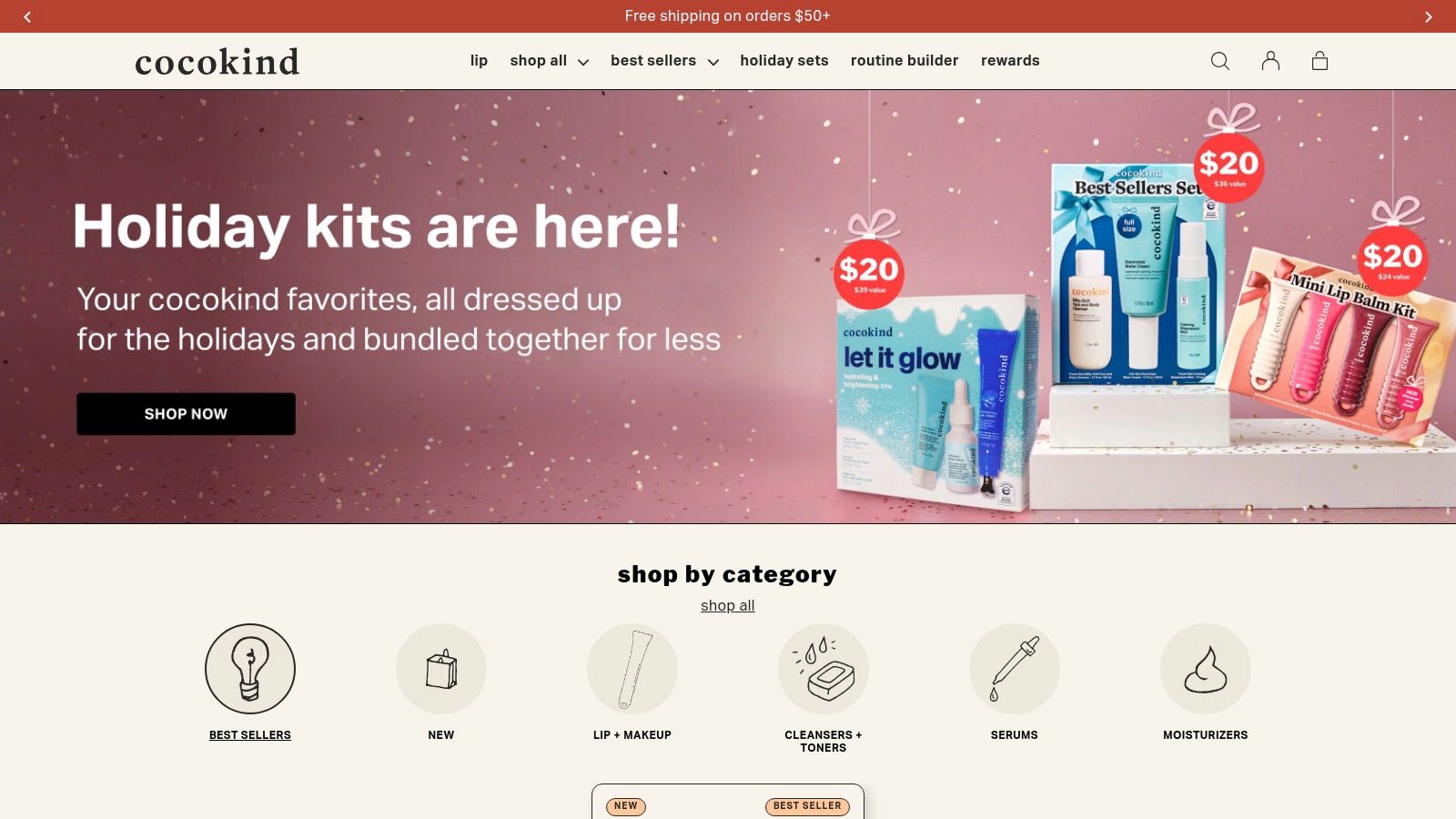
You'll see routine bundles, ingredient explainers, and education ads competing with hero spots. That variety is useful for a creative studio, because each step can carry a new asset. It's also how accounts get noisy. If half the live ads are different SKUs with the same hook, the brand is spraying, not scaling.
What the quiet weeks mean
Scaling means ad volume is up sharply in recent weeks. Stopped means the account went from active ads to zero. An accessibility brand can do either around a retail moment: a burst before a store drop, then a pause on the site. Read the pause against that calendar before you call the account dead.
- Bundle-heavy weeks: Pitch merchandising and order value, not a new brand platform.
- Ingredient ads: Check the claim against that SKU. Values copy that isn't on the page will not survive review.
- Retail-tagged creative: Pitch measurement that separates site and store, or you'll argue about sales you can't see.
A broader assortment makes the first purchase less obvious. The ad should name the step in the routine. "Barrier care" without a product is a soft click.
How the seven DTC beauty brands differ in focus, sales channels, and creative angles
| Item | Core Focus | Sales Channels | Best Creative Angle |
|---|---|---|---|
| Glossier | Skincare, makeup, body care, and fragrance | Online store, retail, and wholesale | Show a simple, connected routine across beauty categories |
| Rhode | Skincare, lip care, and complexion products | Brand online store | Highlight product launches, bundles, and short-form tutorials |
| MERIT | Curated makeup and skincare essentials | Brand online store and Sephora | Demonstrate a polished, minimal routine |
| Saie | Skin-forward makeup with sustainability messaging | Brand online store and retail partners | Pair makeup education with easy-to-use product demonstrations |
| ILIA | Makeup and skincare, especially complexion products | Brand online store and retail | Show shade discovery and skincare-plus-makeup benefits |
| Topicals | Targeted skincare for specific concerns | Brand online store and retailers, including Sephora | Focus on concern-specific routines and distinctive packaging |
| cocokind | Accessible skincare for everyday routines | Brand online store and US retail | Create ingredient and routine education with bundle ideas |
Turning Beauty Ad Signals Into Your Next Prospect List
The strongest lists are timed. A directory of DTC beauty brands tells you a store exists. The ad library tells you whether this week is a launch, a scale-up, a testing mess, or a stop. Presence alone is a weak reason to write.
Four patterns are enough to sort a week of outreach.
- Just started: The first Meta ads fell inside the last 14 days. Pitch tracking, a simple offer, and onboarding before another agency does. Older ads still in the library mean this is not a new advertiser.
- Scaling: Volume is up sharply. These accounts need fresh creative and a retention path so paid doesn't outrun repeat purchase.
- Struggling: Lots of new ads, few still live past two weeks. Lead with landing pages, claims, and offer clarity.
- Stopped: The account went from active to zero. Confirm it isn't the planned end of a limited drop before you offer to "restart" spend.
Save the search so new matches arrive without another manual pass. We cover US brands only, and skincare sits in the live feed with supplements and automotive aftermarket. Each record is a real store, with platform, catalog size, and other ad channels. Brand pages show when advertising started, how many ads are live, what launched and stopped, and which tools are on the homepage, including Klaviyo, Attentive, or a TikTok pixel when they're present. Names of brands that started in the last 7 days stay off public pages, because those leads are what members pay for.
AdvertiserLeads is how we classify those changes from the Meta Ad Library and Google Ads Transparency Center, with a daily refresh. Contact details aren't in the file. Export the CSV and find the person in Clay or Apollo. Keep every note tied to the signal you saw. A store list can't hand you that sentence, and a generic compliment won't survive the first reply.
AdvertiserLeads is a subscription database that flags US ecommerce brands, including skincare, when Meta or Google advertising just starts, scales, struggles, or stops. If you prospect DTC beauty brands, use that feed to time the note around a live signal instead of a static store directory. Set a saved search and visit AdvertiserLeads when you want the next match in your inbox.
Find brands that just started advertising
AdvertiserLeads checks the Meta Ad Library every day and flags ecom brands that just started, scaled or stopped their ads. Create a free account to see the live feed. No card.